Choosing the right DLP projector can significantly improve your viewing experience, whether for immersive home theater entertainment, professional business presentations, gaming, or portable multimedia use. With the rapid advancement of DLP projection technology, modern projectors now offer higher brightness, sharper image quality, smarter connectivity, and more advanced multimedia features than ever before.
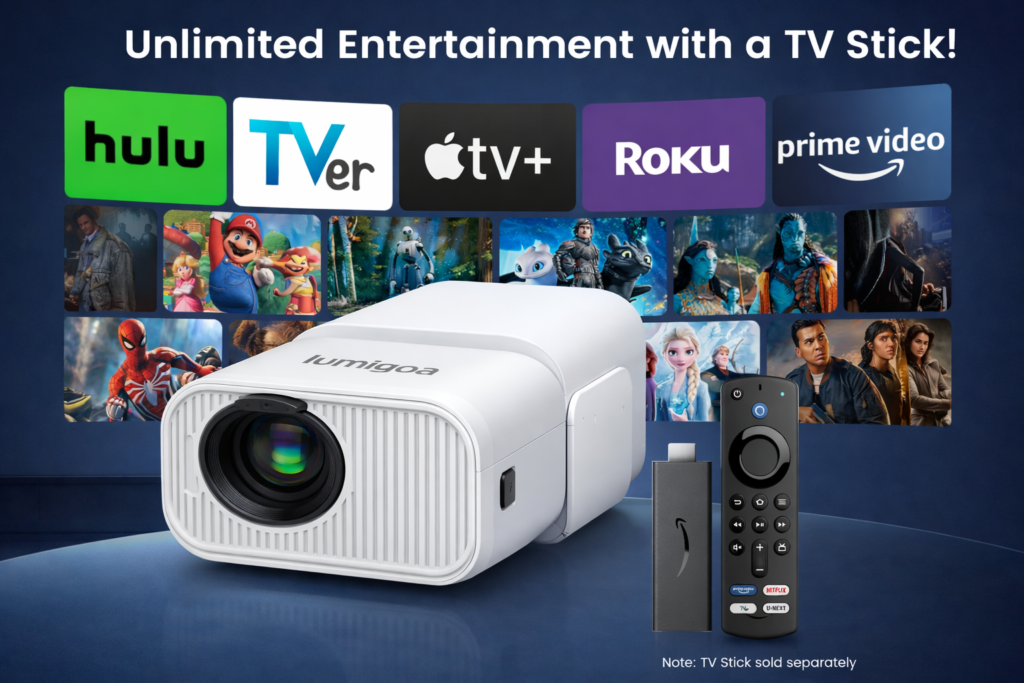
However, with so many projector models available on the market, selecting the ideal projector for your specific needs can be challenging. Factors such as resolution, brightness, contrast ratio, refresh rate, portability, and smart functionality all play an important role in determining overall image performance and user experience. Understanding these key specifications is essential for making a smart long-term investment.
In this comprehensive buying guide, we explore the most important features to consider when choosing a DLP projector, compare different application scenarios, and explain how advanced projection technologies can enhance viewing quality. As a professional projector manufacturer, Lumigoa is committed to delivering innovative DLP projection solutions designed for home entertainment, gaming, business, and modern smart multimedia applications.
What Factors Should You Consider When Choosing a DLP Projector?
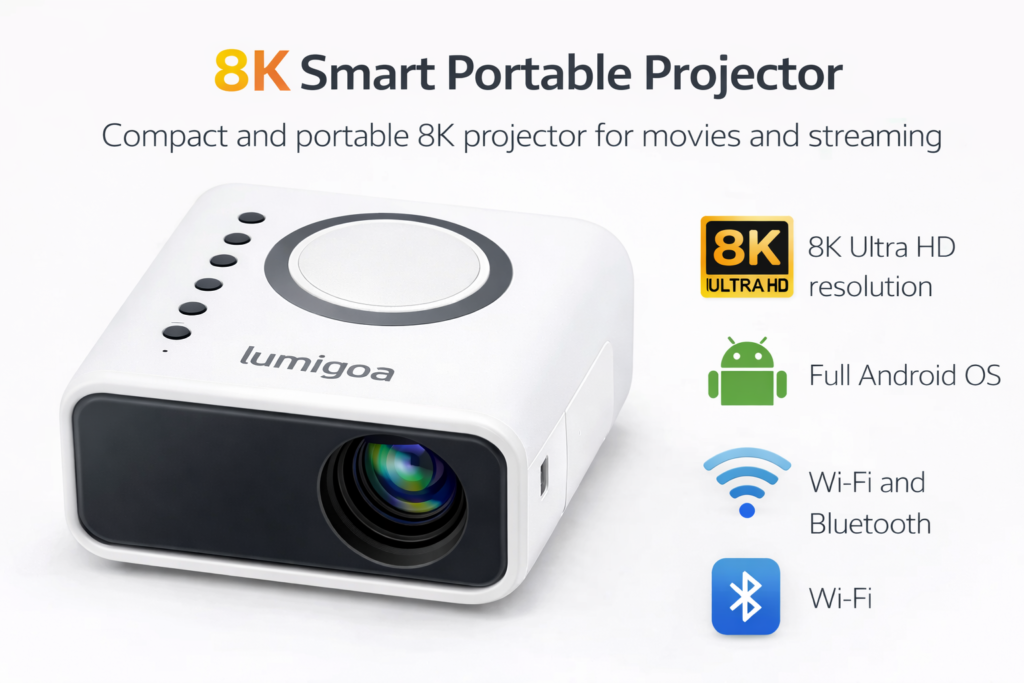
Choosing the right DLP projector involves more than simply comparing prices or basic specifications. Modern projectors are designed for a wide range of applications, including home theater systems, gaming, business presentations, education, and portable entertainment. To achieve the best viewing experience, users should carefully evaluate several important performance factors before making a purchase decision.
Understanding key specifications such as brightness, resolution, image quality, contrast ratio, and projection environment can help ensure that the projector matches both your content requirements and installation conditions.
Brightness and Lumens: Why They Matter
Brightness is one of the most critical specifications when selecting a DLP projector. Projector brightness is measured in lumens, which indicates how much light the projector can produce. The appropriate brightness level depends largely on the viewing environment and ambient lighting conditions.
A projector with insufficient brightness may produce washed-out images, poor contrast performance, and reduced visibility in brighter spaces. On the other hand, higher-lumen projectors can maintain clearer visuals and better image quality even under challenging lighting conditions.
Recommended Brightness Levels
- 1,000–1,500 ANSI Lumens
Suitable for dark home theater rooms and nighttime movie viewing. - 2,000–3,000 ANSI Lumens
Ideal for mixed-use environments such as living rooms, classrooms, and standard office spaces. - 3,000+ ANSI Lumens
Recommended for conference rooms, outdoor projection, commercial displays, and brightly lit environments.
For users planning to use a projector during daytime hours or in spaces with significant ambient light, choosing a higher-brightness smart projector is highly recommended.
Tip: Higher brightness does not always guarantee better image quality. Matching the projector’s lumen output to your viewing environment is essential for achieving balanced contrast and comfortable viewing performance.
Resolution and Image Quality: Key Aspects to Evaluate
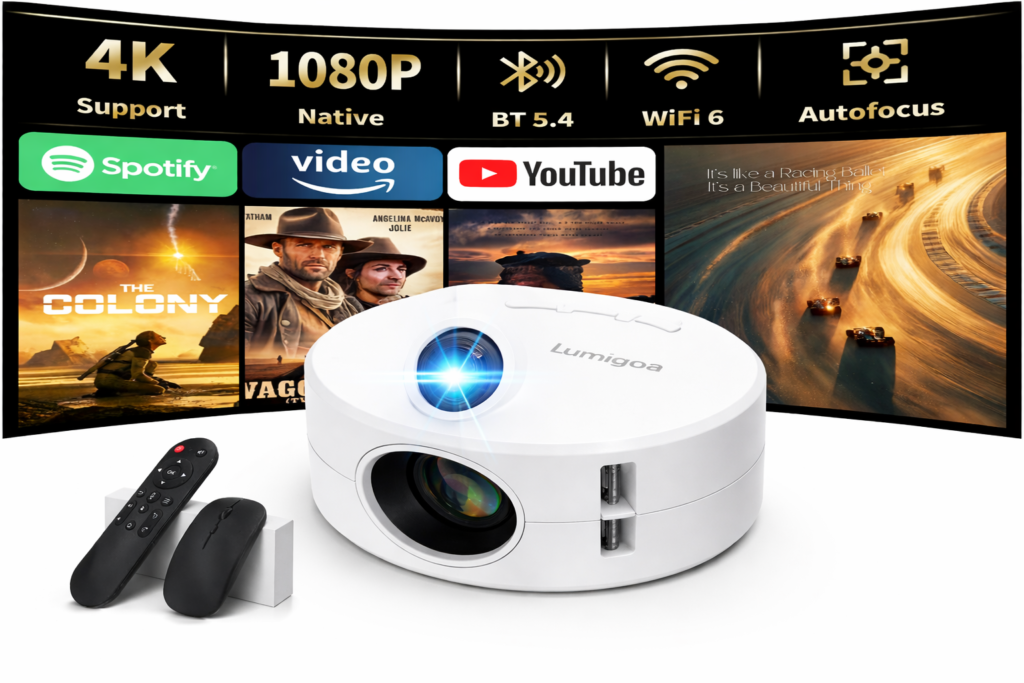
Resolution directly affects image sharpness, detail clarity, and overall visual performance. Higher-resolution projectors can display more image detail, making them ideal for large-screen viewing, high-definition movies, gaming, and professional multimedia applications.
Common Projector Resolutions
| Resolution | Pixel Count | Recommended Usage |
|---|---|---|
| 720P (HD) | 1280 × 720 | Basic entertainment and entry-level projection |
| 1080P (Full HD) | 1920 × 1080 | Home theaters, streaming, and gaming |
| 4K Ultra HD | 3840 × 2160 | Premium cinematic viewing and high-detail content |
How Resolution Affects Viewing Experience
Higher resolutions improve:
- Image sharpness
- Text readability
- Fine detail reproduction
- Large-screen image clarity
- Overall cinematic immersion
For modern home theater projectors, Full HD and 4K resolutions have become increasingly popular because they provide more immersive and realistic visuals.
However, users should also consider their content source and viewing habits. While 4K projectors deliver exceptional detail for ultra-high-definition media, a Full HD projector may already provide excellent performance for standard streaming, presentations, and casual entertainment.
Image quality is also influenced by additional factors such as:
- Contrast ratio
- Color accuracy
- HDR support
- Projection technology
- Lens quality
- Motion processing performance
Modern DLP projectors are particularly valued for their smooth image rendering, strong contrast performance, and reduced motion blur during fast-action content.
Tip: For larger projection screens and cinematic viewing experiences, choosing a Full HD or 4K DLP projector can significantly improve image clarity and overall visual immersion.
Contrast Ratio: Enhancing Visual Depth
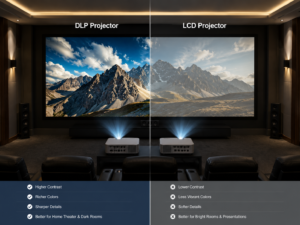
Contrast ratio is one of the most important factors affecting overall projector image quality. It measures the difference between the darkest black tones and the brightest white highlights a projector can display. A higher contrast ratio creates deeper blacks, improved shadow detail, and more realistic image depth, resulting in a more immersive viewing experience.
For home theater projectors and gaming applications, strong contrast performance is especially important because it enhances cinematic visuals and improves scene realism during dark sequences. Projectors with higher contrast ratios generally deliver:
- Better black-level performance
- Richer color depth
- Improved image realism
- Greater visual detail in dark scenes
- Enhanced cinematic immersion
Lower contrast ratios may still work well for business presentations, classrooms, or office environments where displaying text and charts is more important than cinematic image depth.
Modern DLP projectors are widely recognized for their strong contrast performance and smooth image rendering, making them popular for movie enthusiasts and gaming users.
Tip: For movie watching and gaming, choosing a projector with a higher contrast ratio can significantly improve image depth and overall visual realism.
Portability and Size: Finding the Right Fit for Your Space
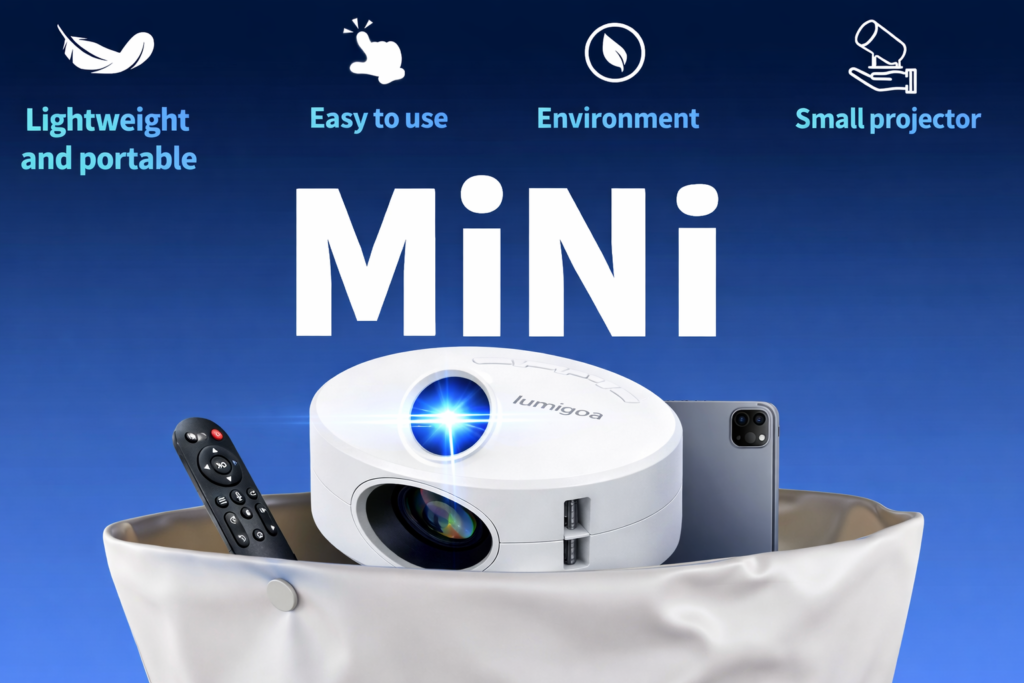
Modern portable DLP projectors are available in a wide range of sizes and configurations, from compact travel-friendly devices to larger home theater systems designed for permanent installation.
When selecting a projector, users should consider:
- Room size
- Installation environment
- Mobility requirements
- Projection distance
- Storage convenience
Portable Mini Projectors
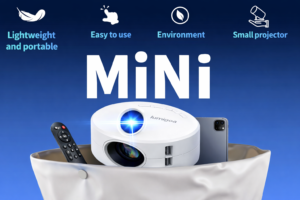
Compact mini projectors are lightweight and easy to transport, making them suitable for:
- Business travel
- Outdoor movie nights
- Small apartments
- Mobile presentations
- Flexible home entertainment setups
Portable projectors often prioritize convenience, wireless connectivity, and easy installation.
Home Theater and Fixed Installation Projectors
Larger projectors are typically designed for permanent setups and may offer:
- Higher brightness output
- Better cooling systems
- Enhanced audio performance
- More advanced optical components
- Improved image quality for large screens
These projectors are ideal for dedicated home theater rooms and professional multimedia environments.
Tip: If you frequently move your projector between locations, choosing a lightweight portable projector with wireless connectivity can provide greater convenience and flexibility.
Advanced DLP Projector Features
Beyond core specifications such as brightness and resolution, modern smart DLP projectors now include advanced features that improve usability, installation flexibility, and multimedia performance.
Keystone Correction
Keystone correction helps eliminate image distortion caused by angled projector placement. When a projector is positioned too high, too low, or off-center, the image may appear trapezoidal instead of rectangular.
Modern projectors often support:
- Automatic keystone correction
- Manual keystone adjustment
- Multi-angle image correction
These technologies help simplify setup and maintain properly aligned visuals in different installation environments.
Lens Shift Technology
Lens shift allows users to reposition the projected image without physically moving or tilting the projector. This feature is especially useful for ceiling-mounted projectors and permanent home theater installations.
Benefits of lens shift include:
- More flexible projector placement
- Reduced image distortion
- Easier installation alignment
- Improved large-screen positioning
Optical Zoom
Optical zoom allows users to adjust image size without moving the projector or reducing image quality. Unlike digital zoom, optical zoom maintains full image resolution and sharpness.
This feature is useful for:
- Variable screen sizes
- Different room layouts
- Flexible viewing distances
- Professional presentation setups
Tip: Features such as auto keystone correction and optical zoom can make projector installation faster and more convenient in different room environments.
360-Degree Projection and Portrait Mode
Some modern portable projectors support flexible projection orientations, including 360-degree rotation and vertical portrait display modes.
These features are useful for:
- Creative digital displays
- Social media content projection
- Retail advertising
- Artistic installations
- Flexible room setups
Portrait projection is becoming increasingly popular for commercial and creative multimedia applications.
Smart Features for Modern DLP Projectors
Modern projectors are no longer limited to basic video playback. Today’s smart projectors integrate advanced multimedia and wireless technologies that significantly improve user convenience.
Wireless Streaming
Wireless streaming capabilities allow users to project content directly from smartphones, tablets, and laptops without relying on physical cables.
Popular wireless features include:
- WiFi screen mirroring
- Bluetooth audio connection
- Wireless casting support
- Smart TV applications
- Cloud media streaming
These features simplify content sharing and improve overall user experience.
Reduced Input Lag for Gaming
For gaming applications, low input latency is extremely important. Lower input lag allows faster response between controller actions and on-screen visuals, creating smoother gameplay.
Gaming-focused projectors often include:
- Game Mode optimization
- High refresh rate support
- Motion enhancement technology
- Faster image processing chips
Modern gaming projectors with low input lag provide more responsive and immersive gaming performance.
Ambient Light Optimization
Advanced projectors now include technologies designed to improve image visibility in bright environments.
These features may include:
- Ambient light compensation
- AI image enhancement
- Dynamic brightness adjustment
- Improved contrast optimization
Combined with specialized projector screens, these technologies help maintain image clarity even under challenging lighting conditions.
How Can You Determine the Best DLP Projector for Specific Applications?
Different viewing scenarios require different projector features and performance priorities. Choosing the best DLP projector depends on how and where the projector will be used. Whether for home theater entertainment, office presentations, gaming, or portable multimedia applications, understanding the key requirements for each use case can help users make a more informed purchasing decision.
Modern smart DLP projectors are designed to support a wide range of environments, combining advanced image quality, intelligent multimedia features, and flexible connectivity options for both personal and professional applications.
Home Theater Use: Features to Prioritize
For immersive home cinema experiences, image quality and viewing comfort should be the top priorities. A high-performance home theater projector can create a cinematic atmosphere with large-screen visuals, rich contrast, and realistic color reproduction.
Important Features for Home Theater Projection
- Full HD or 4K Resolution
Higher resolution improves image sharpness and cinematic detail, especially on large projection screens. - High Contrast Ratio
Strong contrast performance enhances black levels and shadow detail, creating deeper and more immersive visuals during movie playback. - Quiet Cooling System
Low fan noise is important for maintaining a comfortable and distraction-free viewing environment. - HDR and Advanced Color Processing
Modern projectors with HDR support provide improved brightness balance and more realistic color reproduction. - 3D Projection Support
Some advanced projectors support 3D playback for enhanced entertainment experiences.
DLP technology is particularly popular for home theater applications because of its smooth image rendering and strong motion performance during fast-moving scenes.
Tip: For the best home theater experience, choose a DLP projector with high contrast performance, quiet operation, and Full HD or 4K resolution support.
Office Presentations: Prioritizing Functionality and Brightness
For business and professional environments, functionality, readability, and installation flexibility become more important than cinematic image depth.
Key Features for Business Projectors
- High Brightness Output
Projectors with 3,000+ ANSI lumens are better suited for conference rooms and brightly lit office environments. - Sharp Text Clarity
Clear image detail is essential for presentations, spreadsheets, and charts. - Flexible Connectivity
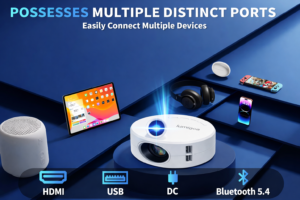
HDMI, USB, wireless screen mirroring, and Bluetooth connectivity improve compatibility with modern office devices. - Portable Design
Lightweight projectors are easier to transport between meeting rooms and workspaces. - Quick Setup Features
Auto keystone correction and intelligent focus adjustment simplify installation.
For professional presentations, Full HD resolution is generally sufficient for maintaining excellent text readability and image clarity.
Tip: For office presentations and classroom use, prioritize brightness performance and text clarity over advanced cinematic features.
Gaming and Entertainment: Low Latency and Smooth Motion Performance
Gaming requires fast image response and smooth motion handling. Modern gaming projectors are specifically designed to reduce input lag and improve responsiveness during fast-paced gameplay.
Essential Features for Gaming Projectors
- Low Input Lag
Lower latency improves controller response speed and gameplay accuracy. - High Refresh Rate Support
Refresh rates such as 60Hz or 120Hz provide smoother visuals during high-speed gaming and action content. - Full HD or 4K Resolution
Higher resolutions improve visual detail and overall gaming immersion. - Motion Enhancement Technology
Advanced image processing reduces motion blur and improves scene clarity. - Strong Contrast and Color Performance
Better contrast and color depth improve visual realism during gameplay.
DLP projectors are often preferred for gaming because of their faster response times and smoother image transitions compared with many traditional display technologies.
Why Choose Lumigoa as Your Reliable DLP Projector Manufacturer?

As a professional projector manufacturer, Lumigoa specializes in developing advanced DLP projector solutions for home entertainment, gaming, business presentations, and portable multimedia applications.
Our projector products combine:
- Advanced DLP display technology
- Smart Android operating systems
- Wireless streaming functionality
- Full HD and 4K support
- Intelligent image optimization
- Low-noise cooling systems
- Portable and modern product designs
Advanced Projection Technology and Product Innovation
Lumigoa focuses on delivering high-quality image performance through advanced optical engineering and intelligent multimedia technologies. Our projectors are designed to provide:
- Sharper visuals
- Improved contrast performance
- Smoother motion rendering
- Stable wireless connectivity
- User-friendly operation
Modern features such as auto focus, auto keystone correction, and smart wireless streaming help simplify setup and improve everyday usability.
Professional OEM and ODM Manufacturing Support
In addition to consumer projection products, Lumigoa also provides professional OEM and ODM manufacturing solutions for global distributors, retailers, and business partners.
Our services include:
- Product customization
- Logo and packaging design
- Software customization
- Hardware configuration support
- International quality control standards
Conclusion
Choosing the right DLP projector depends on understanding your viewing environment, performance expectations, and primary usage requirements. Factors such as brightness, resolution, contrast ratio, portability, refresh rate, and smart functionality all play important roles in determining the overall viewing experience.
For home theater enthusiasts, high contrast performance and cinematic image quality are essential. Business users may prioritize brightness, portability, and connectivity, while gamers often focus on low input lag and smooth motion handling. By carefully evaluating these features, users can select a projector that delivers the best balance of performance, convenience, and long-term value.
Modern smart DLP projectors continue to evolve with advanced technologies such as wireless streaming, intelligent image correction, 4K support, and enhanced motion processing. These innovations make today’s projectors more versatile and user-friendly than ever before, supporting a wide range of entertainment and professional applications.
As a professional DLP projector manufacturer, Lumigoa remains committed to providing high-quality projection solutions with advanced display technology, reliable performance, and innovative smart features for global customers. Whether for home entertainment, gaming, office presentations, or portable multimedia use, Lumigoa projectors are designed to deliver immersive viewing experiences and dependable long-term performance.