Choosing the right projector technology is essential for achieving the best viewing experience, whether for home entertainment, gaming, business presentations, or professional installations. Among the most widely used projection technologies today, DLP projectors and LCD projectors continue to dominate the global projector market. Both technologies offer unique strengths in image quality, brightness performance, color reproduction, and overall visual experience.
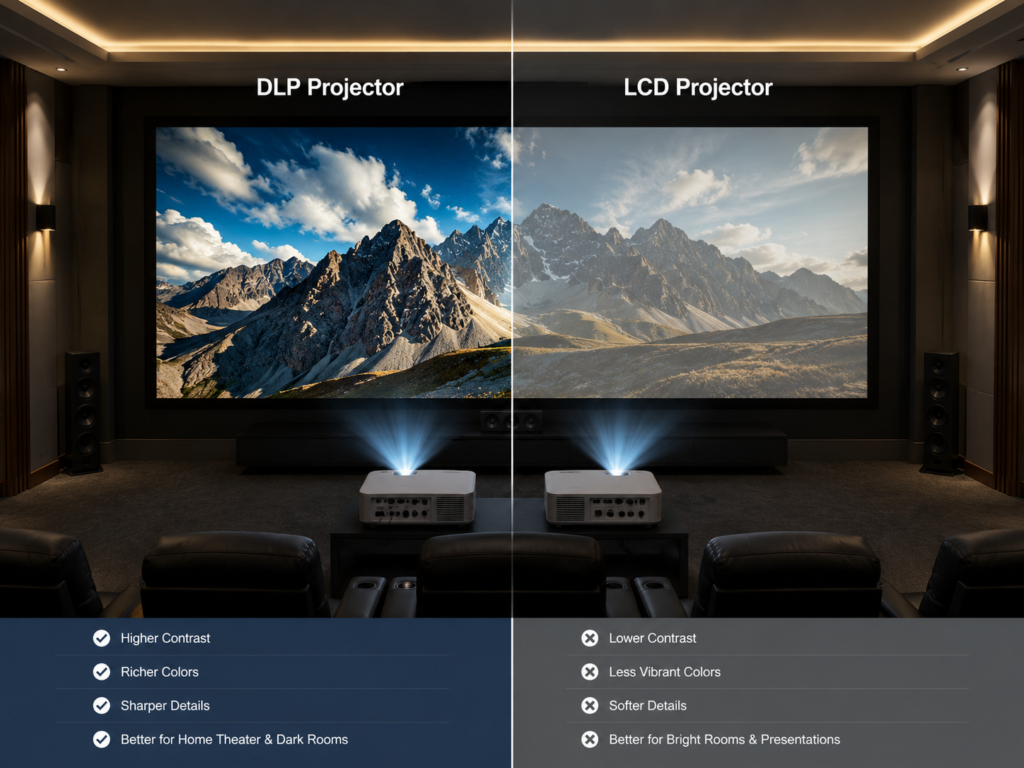
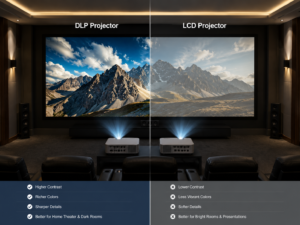
When comparing DLP vs LCD projectors, many buyers focus primarily on picture quality. Factors such as contrast ratio, color accuracy, image sharpness, motion smoothness, and brightness can significantly affect how content appears on screen. While DLP projection technology is known for excellent contrast and smooth motion handling, LCD projectors are often praised for vibrant colors and sharp image detail.
In this comprehensive comparison guide, we explore the key differences between DLP and LCD projectors, including their image performance, advantages, limitations, and ideal applications. Whether you are building a home theater system, upgrading a gaming setup, or selecting a projector for professional use, understanding these technologies will help you choose the best projection solution for your needs.
What Are the Key Differences Between DLP and LCD Projectors?
When comparing DLP projectors and LCD projectors, it is important to understand that both technologies use completely different image projection methods. These differences directly affect image quality, brightness performance, color accuracy, maintenance requirements, and overall viewing experience.
While LCD projection technology is often preferred for vibrant color brightness and cost-effective performance, DLP projectors are widely recognized for smoother visuals, stronger contrast ratios, and sharper image clarity. Choosing between the two depends on your viewing environment, application needs, and budget expectations.
Below is a detailed comparison of the key differences between DLP vs LCD projectors.
| Aspect | LCD Projectors | DLP Projectors |
|---|---|---|
| Price | More affordable and suitable for budget-conscious users. | Generally more expensive due to advanced DLP technology. |
| Brightness | Good color brightness for indoor use. | Higher overall brightness and better performance in larger spaces. |
| Image Quality | Sharp visuals but may show slight pixelation. | Smoother and clearer images with better motion handling. |
| Color Performance | Vibrant and natural-looking colors. | Richer contrast and more cinematic color depth. |
| Contrast Ratio | Moderate black-level performance. | Deeper blacks and stronger contrast performance. |
| Maintenance | Requires occasional filter cleaning. | Lower maintenance with enclosed optical design. |
| Portability | Often slightly larger in size. | More compact and portable design. |
Tip: DLP projectors are often preferred for home theater and gaming because of their smoother motion performance and higher contrast ratios, while LCD projectors are popular for business presentations and classroom environments due to their strong color brightness.
Both DLP and LCD projectors continue to evolve with advancements in smart display technology, laser light sources, and high-resolution projection systems. Understanding these core differences can help users select the most suitable projector technology for their specific viewing needs and installation environments.
How Do DLP and LCD Projectors Compare in Image Quality?
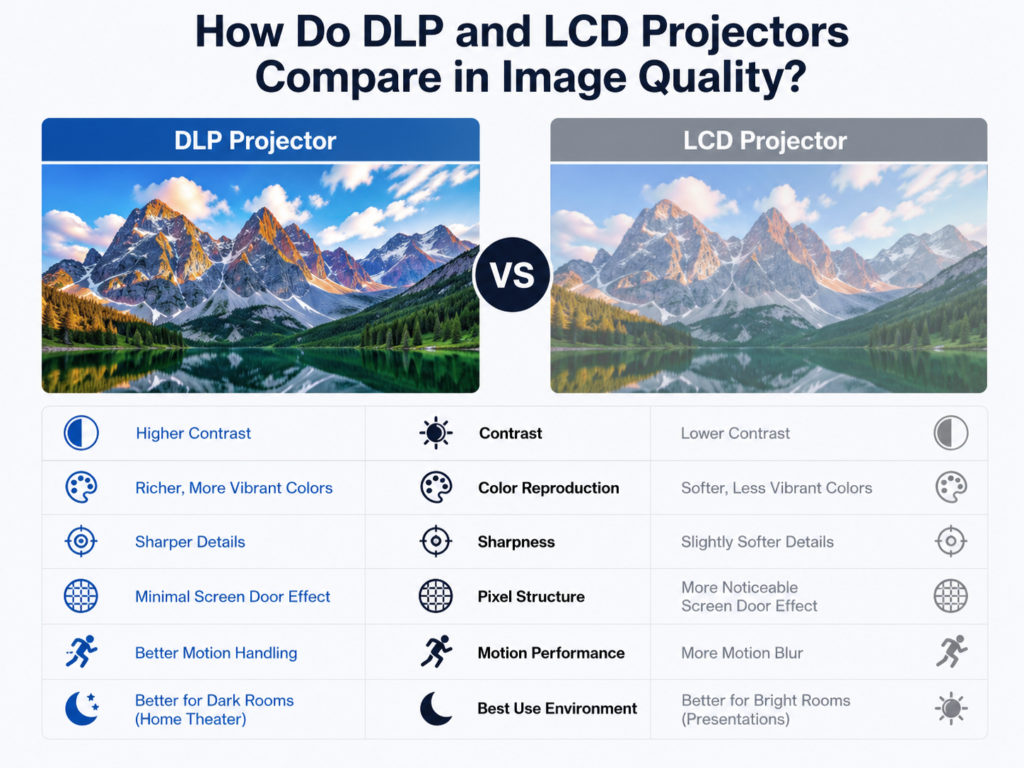
Image quality is one of the most important factors when comparing DLP projectors and LCD projectors. Brightness performance, color accuracy, contrast ratio, and image sharpness all play critical roles in determining the overall viewing experience. While both technologies can deliver excellent visuals, they perform differently depending on the projection environment and content type.
Brightness and Color Accuracy
DLP Projectors
The brightness performance of a DLP projector largely depends on its light source technology and optical design. Traditional lamp-based DLP systems may prioritize overall brightness over color brightness, especially in entry-level single-chip models that utilize color wheel technology.
However, modern laser DLP projectors and advanced smart projection systems have significantly improved color accuracy and brightness consistency. High-end DLP projectors can now deliver excellent contrast performance, vibrant colors, and smoother image rendering for home theaters, gaming, and professional multimedia applications.
LCD Projectors
LCD projectors are widely recognized for their strong color brightness and highly accurate color reproduction. Since LCD technology uses separate RGB liquid crystal panels, colors remain bright and vivid without major brightness loss during image processing.
This makes LCD projectors especially suitable for:
- Business presentations
- Educational environments
- Bright conference rooms
- Multimedia content with colorful visuals
In environments with significant ambient light, LCD projectors often maintain stronger visible color performance.
Tip: LCD projectors are often preferred for brightly lit rooms, while DLP projectors are popular for cinematic viewing environments with stronger contrast performance.
Resolution and Sharpness
DLP Projectors
One of the major advantages of DLP projection technology is smooth image rendering and reduced visible pixelation. DLP projectors use microscopic mirrors that rapidly shift to create highly detailed visuals with strong motion clarity.
Many modern 4K DLP projectors utilize advanced pixel-shifting technology to simulate ultra-high-definition resolution while maintaining compact projector designs and lower manufacturing costs.
DLP projectors are particularly effective for:
- Home theater systems
- Gaming setups
- Sports broadcasts
- Fast-moving video content
The smoother image transitions and reduced motion blur create a more immersive viewing experience.
LCD Projectors
LCD projectors are known for producing naturally sharp images with strong detail reproduction. Their panel-based display structure allows text, graphics, and static images to appear highly crisp and clear.
However, lower-resolution LCD models may sometimes display a visible pixel grid effect, commonly referred to as the “screen door effect,” especially on larger projection screens or close viewing distances.
Despite this limitation, LCD technology remains highly effective for presentations, educational content, and detailed visual applications.
Tip: DLP projectors generally provide smoother motion handling and sharper cinematic visuals, while LCD projectors excel at displaying detailed text and vibrant static images.
Overall, both DLP and LCD projectors offer strong image quality advantages in different scenarios. DLP technology is often favored for contrast performance, smooth motion, and cinematic viewing, while LCD projectors remain highly competitive in color brightness, image detail, and presentation-focused applications.
In What Environments Do DLP and LCD Projectors Perform Best?
Choosing between a DLP projector and an LCD projector often depends on the viewing environment and intended application. Factors such as ambient lighting, screen size, motion performance, and portability can significantly influence which projection technology delivers the best results.
While both technologies are capable of producing excellent visuals, each performs particularly well under different conditions.
Best Environments for DLP Projectors
Home Theater Systems
DLP projectors are widely regarded as one of the best choices for home theater environments. Their strong contrast ratios, deeper black levels, and smoother motion performance create a more immersive cinematic viewing experience, especially in dark or controlled lighting conditions.
Modern home theater DLP projectors are particularly effective for:
- Movies and streaming content
- Sports broadcasts
- Gaming
- High-definition video playback
The enhanced contrast performance helps improve shadow detail and overall image depth, making films appear more realistic and visually engaging.
Gaming and Fast-Motion Content
One of the major strengths of DLP projection technology is its fast image response and smooth motion handling. DLP projectors generally produce less motion blur, making them highly suitable for gaming and action-heavy content.
Gamers often prefer DLP projectors because they typically offer:
- Lower input lag
- Faster refresh performance
- Smoother image transitions
- Better motion clarity
These advantages help create a more responsive and immersive gaming experience.
Portable and Compact Applications
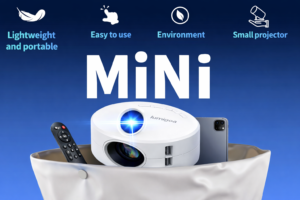
Many portable projectors and mini projectors utilize DLP technology because of its compact optical design. DLP projectors are often smaller, lighter, and easier to transport than traditional LCD systems, making them ideal for:
- Travel use
- Outdoor movie nights
- Small apartments
- Portable business presentations
Tip: DLP projectors are often the preferred choice for home theater and gaming setups because of their stronger contrast ratios and smoother motion performance.
Optimal Environments for LCD Projectors
Classrooms and Business Presentations
LCD projectors perform exceptionally well in educational and professional environments where brightness and color visibility are critical. Their strong color brightness allows presentations, charts, documents, and text to remain clear even in rooms with moderate ambient lighting.
LCD projectors are commonly used in:
- Schools and classrooms
- Meeting rooms
- Conference halls
- Training centers
- Office presentations
The vibrant color reproduction and sharp image detail help improve readability and visual communication during presentations.
Bright Rooms and Daytime Viewing
One of the key advantages of LCD technology is its ability to maintain strong visible brightness in brighter environments. Since LCD projectors deliver high color brightness, they often perform better than some projector types in spaces with natural light or limited lighting control.
This makes LCD projectors suitable for:
- Daytime presentations
- Living rooms with windows
- Retail displays
- Public information screens
Large Venue Projection
LCD projectors are also widely used in larger venues because of their ability to produce bright and highly visible images across larger screen sizes. Their consistent brightness performance helps maintain image clarity during presentations and multimedia playback.
Tip: LCD projectors are ideal for classrooms, offices, and bright environments where high color brightness and sharp text clarity are essential.
Is Lumigoa a Reliable Projector Manufacturer?

Choosing a reliable projector supplier is just as important as selecting the right projection technology. As a professional projector manufacturer, Lumigoa focuses on developing advanced projection solutions designed for home entertainment, gaming, business presentations, and portable multimedia applications.
Our projector lineup includes:
- Smart projectors
- DLP projectors
- Portable mini projectors
- Home theater projectors
- Wireless projectors
- 4K projection systems
Lumigoa combines modern projection technology with intelligent multimedia features to deliver reliable image quality, smooth performance, and user-friendly viewing experiences for global customers.
Advanced DLP Projection Technology
Lumigoa specializes in advanced DLP projector technology, offering projection systems with:
- High contrast performance
- Smooth motion rendering
- Sharp image clarity
- Intelligent image optimization
- Low-noise cooling systems
- Wireless connectivity support
These features help improve visual performance while reducing common display issues such as motion blur and image distortion.
Why Choose Lumigoa?
Lumigoa is committed to providing high-quality projection solutions with strong OEM and ODM manufacturing support. Our products are designed to meet the growing demands of modern home entertainment and professional display markets.
Key advantages include:
- Reliable product quality
- Advanced smart features
- Modern compact designs
- Global customer support
- Professional manufacturing experience
- Customized projector solutions
Tip: Choosing a projector manufacturer with advanced DLP expertise and strong quality control can help ensure long-term product reliability and better viewing performance.
Conclusion
Both DLP projectors and LCD projectors offer unique advantages in image quality, brightness performance, and viewing experience. While DLP technology is widely recognized for its superior contrast ratios, smoother motion handling, and cinematic visuals, LCD projectors continue to perform strongly in color brightness, sharp image detail, and well-lit presentation environments.
Choosing between DLP vs LCD projectors ultimately depends on your specific viewing needs, installation environment, and usage scenarios. For home theater systems, gaming, and fast-action content, many users prefer DLP projectors because of their smoother image rendering and deeper black levels. On the other hand, LCD projectors are often ideal for classrooms, offices, and bright spaces where vibrant colors and clear text visibility are essential.
As projection technology continues to evolve, modern projectors now integrate advanced smart features, wireless connectivity, laser light sources, and high-resolution display capabilities that further improve image quality and user experience. Whether you are looking for a portable projector, home theater projector, or professional display solution, selecting the right projection technology can significantly enhance your overall viewing performance.
As a professional projector manufacturer, Lumigoa remains committed to delivering innovative projection solutions with advanced display technology, reliable image quality, and intelligent multimedia features designed for modern entertainment and professional applications worldwide.